
Illustrative industry solution · Not a client result
Industrial Equipment Export Website Build
For packaging machinery, processing equipment and automation suppliers, a website should help purchasing, engineering and management teams assess application fit, not merely display machines. This proposed approach connects selection resources, applications, trial discussions and inquiry follow-up in a maintainable export website. It is an industry solution, not a delivered client project.
Equipment solution illustrations
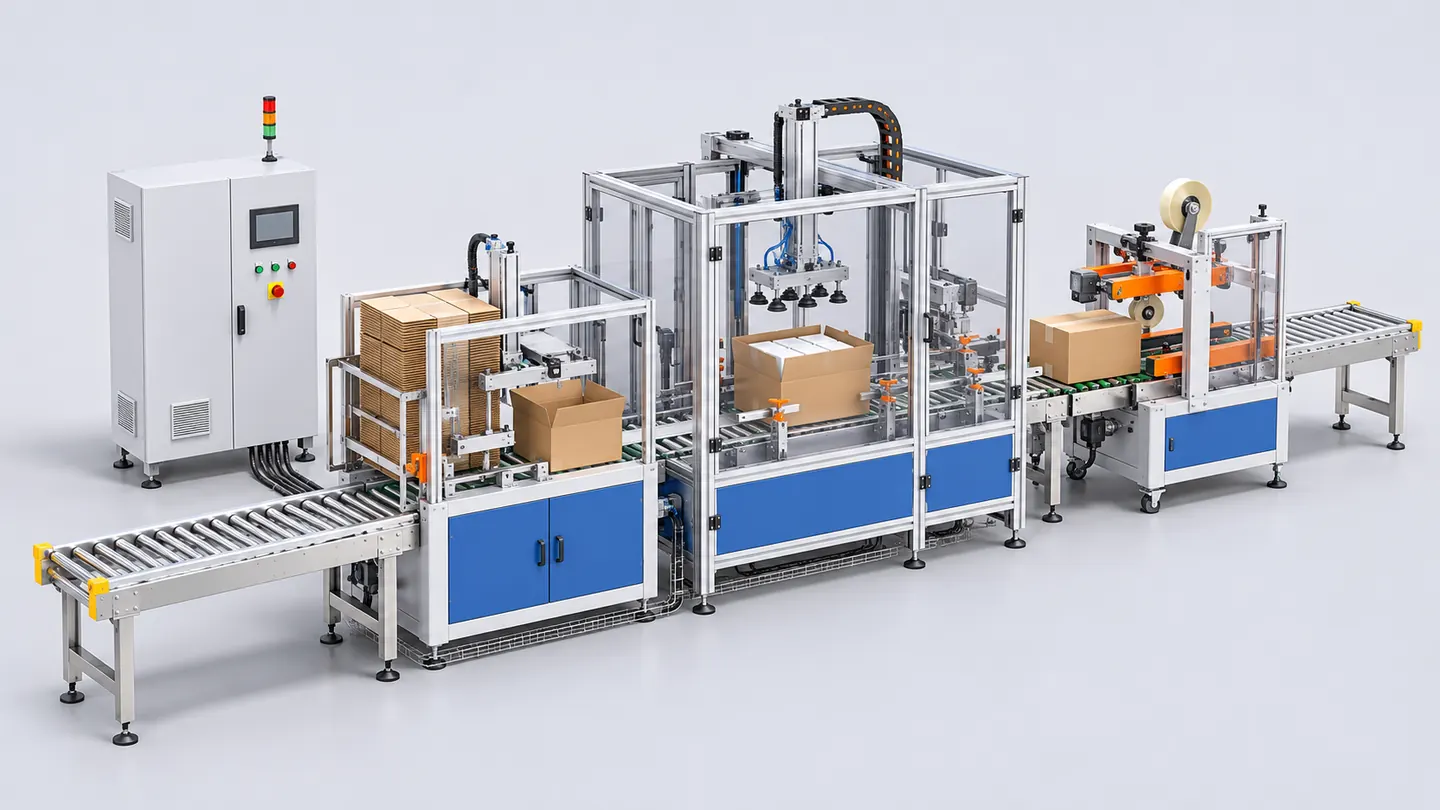
Automated packaging and conveying
Application pages can explain equipment composition, adjacent processes and site requirements.

Equipment models and construction
Model pages can organize selection information around overall equipment, working areas and key components.
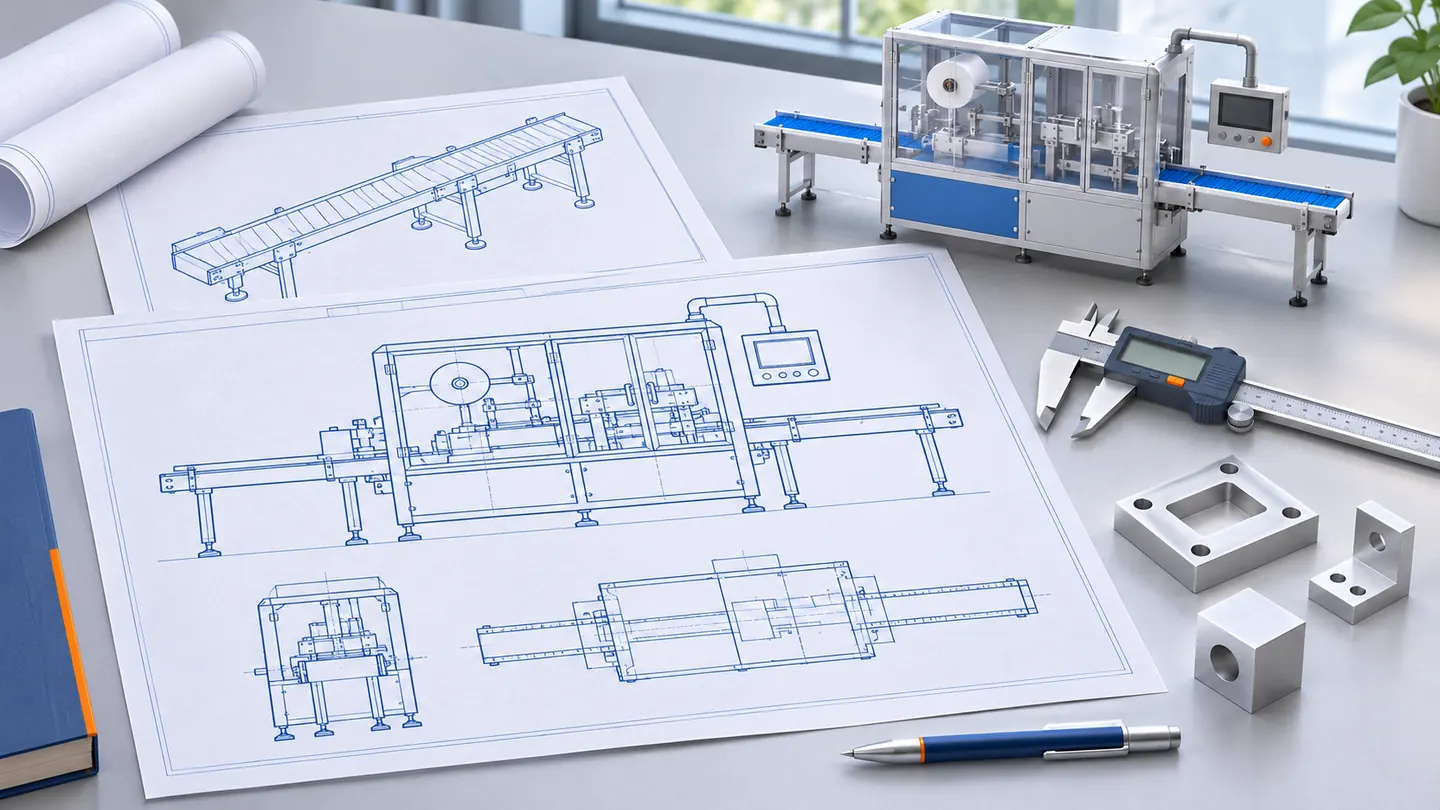
Technical resources and selection discussions
Datasheets, drawings and sample records can support technical discussions.
Start with the purchasing journey
This is a proposed equipment-site architecture and inquiry workflow. Pages, specifications and service scope must be adapted to the actual equipment range.
01
Define the application
Describe the material, operating environment, target output and existing production conditions.
02
Shortlist models
Compare suitability, key specifications, available options and utility requirements.
03
Review documents
Check datasheets, drawings, operating videos and applicable test documentation.
04
Discuss a trial
Agree on samples, trial conditions and acceptance criteria where appropriate.
05
Request a quote
Provide quantity, destination, purchasing timing and installation requirements.
06
Confirm with specialists
Sales and engineering review suitability, configuration and quotation scope.
Recommended website architecture
- Page module
- Equipment catalog
- Proposed information
- Categories based on purpose, workpiece or process, with relevant filters for the actual product range.
- Buyer's next step
- Shortlist models and open their details.
- Page module
- Model details
- Proposed information
- Model identity, specifications with units, operating limits, options, dimensions, utilities and documents.
- Buyer's next step
- Check suitability and discuss configuration or pricing.
- Page module
- Application solutions
- Proposed information
- Equipment combinations, process steps, constraints and required customer inputs for an application.
- Buyer's next step
- Share operating conditions and request a discussion.
- Page module
- Technical resources
- Proposed information
- Datasheets, selection notes, installation requirements, maintenance guides and verified test records.
- Buyer's next step
- Complete an initial review and discuss samples or trials.
- Page module
- Technical content and FAQs
- Proposed information
- Selection comparisons, process questions, maintenance topics and purchasing or project preparation.
- Buyer's next step
- Visit a relevant model, application or inquiry page.
- Page module
- Inquiries and support
- Proposed information
- Staged requirements collection and clear communication about selection, delivery, installation and support.
- Buyer's next step
- Create a usable record for sales follow-up.
The purchasing problem: a product introduction does not establish suitability
- Purchasing teams consider cost, delivery and supplier coordination; engineers need workpiece, precision, output, utility and integration information. A machine photograph and model name cannot answer both sets of questions.
- Specifications without units, conditions or revisions are difficult to compare. A request for a price alone leaves sales staff chasing basic application and configuration details.
- The website supports initial explanation and requirements collection, not final engineering approval. Publish only substantiated performance, documentation and service statements.
Model details: build a checkable selection record
- Each model should identify its purpose, specifications with units, operating range, standard and optional configurations, dimensions, utilities and limitations. Actual values must come from the supplier, not generic example specifications.
- Organize images by overall machine, working area, controls and key components. State the conditions shown in operating videos, and identify model and revision information on drawings, datasheets and maintenance resources.
- Separate configuration discussions, document requests, trials and quotations. Carry the selected model into the inquiry to avoid asking the buyer to describe it again.
Applications: connect equipment with operating conditions
- Build each application page around a defined workpiece or production task, with input material, process, output requirements, possible equipment combinations and customer-site inputs.
- For an illustrative packaging application, discuss the packaged item, dimensions, packaging format, upstream feed and downstream integration. Engineering staff must confirm values, cycle requirements and suitability.
- Use authorized references with a stated scope. Where project evidence is unavailable, publish a labeled process explanation rather than invented customers, factory photographs or savings.
Content and languages: answer recurring pre-purchase questions
- Organize content around selection, configuration differences, process preparation, installation, operation and maintenance, linking to relevant models and resources. Complete core buying pages before expanding article volume.
- Language work includes reviewing units, electrical and site-condition wording, terminology and document revisions, as well as page titles, descriptions, image alt text, breadcrumbs and language relationships.
- Separate category, model, application and technical-guide intent. Assess relevant search visibility through authorized GSC evidence, not the number of published pages.
Inquiry coordination: automation assists, specialists decide
- Initially collect equipment direction, workpiece, destination and contact details. Gather output targets, options, timing and trial needs during follow-up rather than forcing a long technical questionnaire into the first form.
- Depending on the agreed scope, WhatsApp and back-office workflows can support translation, common-question replies, reply suggestions and preliminary qualification. Confirm account authorization, business rules and data handling before configuration.
- Track missing information, technical evaluation, quotation follow-up and non-target requests, with human reassignment available. Pricing, suitability, delivery and contractual commitments remain decisions for sales and engineering staff.
Deliverables and acceptance: make the work inspectable
- Proposed deliverables include information architecture, equipment-data templates, model-to-content mapping, product and application templates, inquiry fields, administration notes and a launch checklist. Quantities and languages are subject to agreement.
- Check specifications, downloads, video, mobile tables, contact actions, form validation and success or failure messages, followed by URLs, canonicals, sitemaps, crawl access and applicable structured data.
- Proceed through data preparation, core-page construction, technical acceptance and content iteration. Establish maintainable content and workflows before expanding languages or automation.
Measurement: distinguish browsing from qualified project opportunities
- Review GSC impressions, clicks and indexing by equipment family and market, with reporting periods and crawl scope stated. Indexability does not confirm Google indexing.
- Track downloads, trial requests, submissions, qualified technical conversations and quotation opportunities separately. Reconcile them with sales follow-up rather than treating every click or message as a qualified inquiry.
- This illustrative plan has no client baseline or analytics evidence. No traffic lift, lead multiplier, return on investment or fixed outcome timeline is supplied; an authorized reporting framework can be agreed for an actual project.